

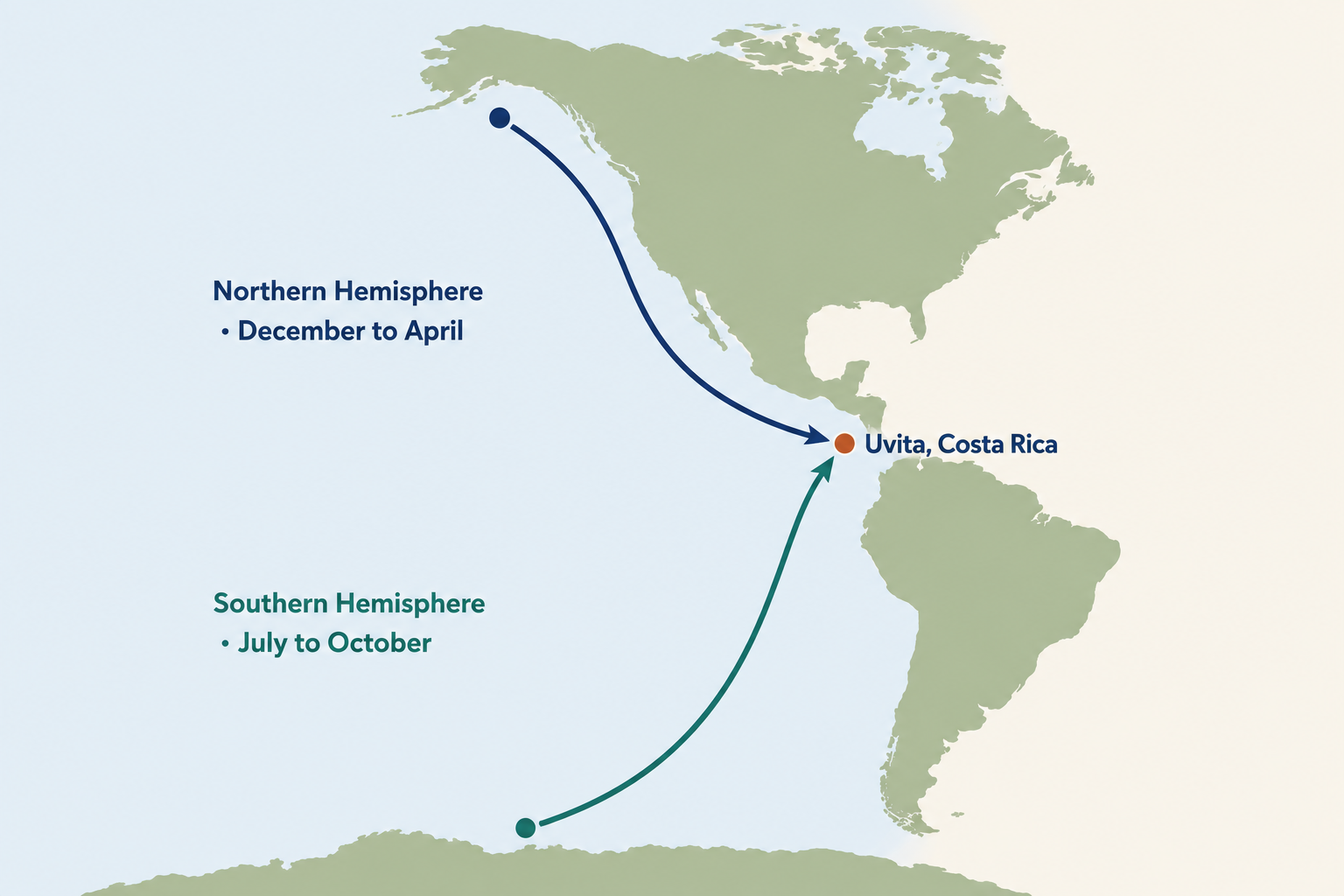
Whale watching in Uvita at Oxygen Jungle Villas means humpback whales from two different hemispheres, one season from December to April and another from July to October, both visible from Marino Ballena National Park. The two overlapping migrations give Uvita one of the longest whale watching seasons on Earth, and it all unfolds just minutes from your villa.
The boat slows. A plume of mist hangs in the air. Then, a dark shadow the length of a school bus rolls up through the surface and slides under again, close enough that the exhale carries across the water. Behind you, Uvita’s famous Whale’s Tail sandbar curves out from the shore and lush palms kiss the coast.
Whale watching is one of the many draws for couples traveling to Uvita, Costa Rica. Oxygen Jungle Villas boutique hotel lies in the rainforest hills above Marino Ballena National Park, with the Pacific and the Whale’s Tail visible from the villas themselves.
Most whale watching destinations get one migration and one narrow window. Uvita gets two, which makes it a rare place to build a honeymoon or an anniversary around. This is your guide to when to go and how to see the whales, so you can plan your stay around the months they’re here.
Check villa availability for your travel dates and lock in your stay.
The Two Whale Seasons in Uvita, Costa Rica
Uvita sits about twenty minutes south of Dominical on the South Pacific coast.
From roughly late July through October, Southern Hemisphere humpback whales arrive after the long swim up from Antarctica to breed and raise their calves in Costa Rica’s warm Pacific waters, with the peak usually landing in August and September.
Researchers sometimes call this group the “Group F” stock, and it’s the larger of the two populations that pass through the bay each year, according to a recent Uvita whale season guide from Costa Rica Spirit.
Then, from around December through April, an entirely separate population arrives from the north. Northern Hemisphere humpback whales travel down from Alaska and the North Pacific, with sightings building through a run of late December arrivals and peaking in January and February.
The two populations of humpback whales in Uvita overlap briefly, late July into August and again December into January, which is your best shot at seeing both in a single trip.
The easiest way to spot humpback whales here is still a boat, not the shoreline, though you don’t need experience at sea to see humpback whales breach a few hundred feet away once you’re out on the water.
| Season | Months | Peak | Whales Travel From |
|---|---|---|---|
| Southern Hemisphere | Late July – October | August – September | Antarctica |
| Northern Hemisphere | December – April | January – February | Alaska & the North Pacific |
Manuel Antonio and Guanacaste see whales too, but only in a narrow window. Marino Ballena remains a rare example of a national park in Costa Rica built specifically around a migration route, one of the most reliable ways to see whales in Costa Rica without gambling on a single window.
The September Peak and Uvita’s Whale and Dolphin Festival
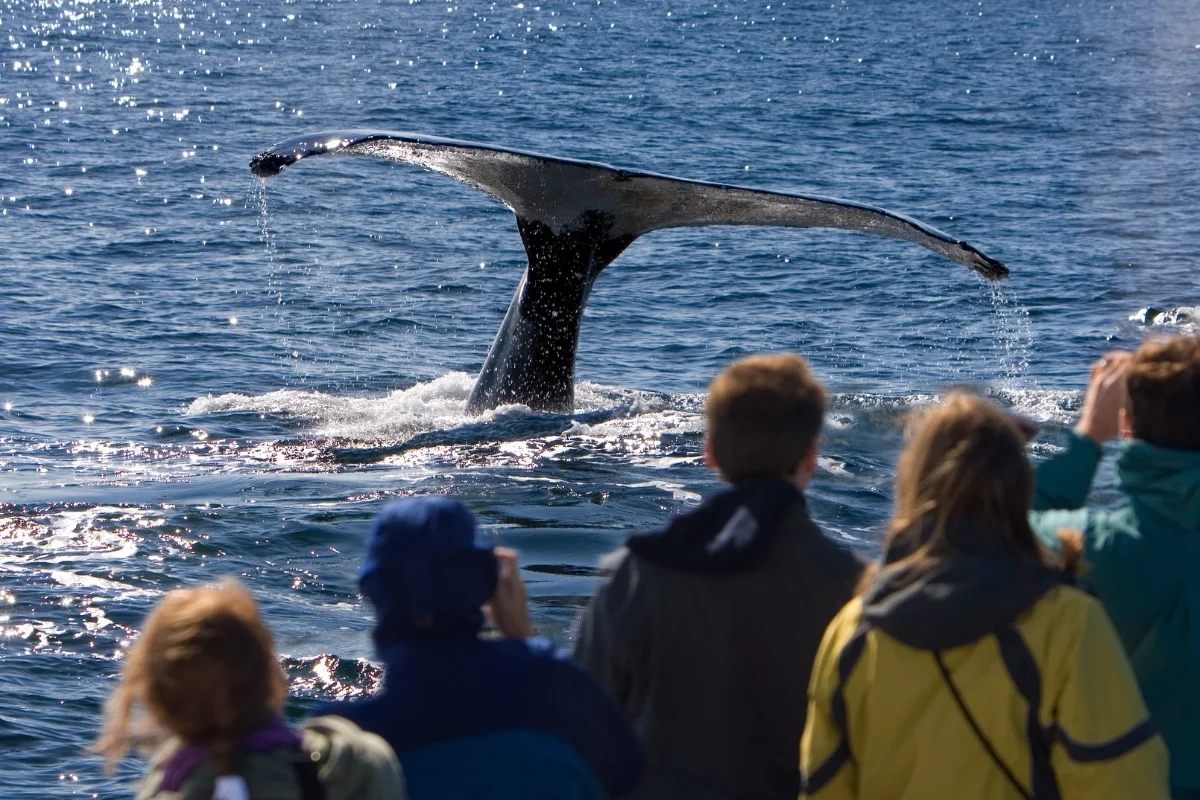
September is a special time of month to visit Uvita. The Southern Hemisphere migration is in full swing, calves are close to their mothers, and the town leans into it with the Whale and Dolphin Festival, an annual celebration of whale and dolphin watching typically held over the first or second week of the month, all in the calm waters of Bahía Ballena.
Locals and visitors gather each year to celebrate the return of majestic humpback whales to the bay, and it’s worth timing a trip around if you want to discover the best of the season alongside the community that protects it.
The festival is organized by local tourism and guide associations, backed by Costa Rica’s tourism board, and it’s grown into a real community event rather than a tourist add-on. Expect live music, food stalls, beach cleanups, kite-making for kids, and educational sessions on why the park’s protections matter, alongside shorter boat trips out to see the whales up close, according to reporting from the Tico Times.
If you’re reading this outside of festival week, don’t worry! The whales and dolphins are the real draw (not the festival), and they’re in these waters for most of the year regardless of what’s happening on the beach that weekend. Sea turtles nest on Uvita’s beaches too, mostly between July and November, so a rainy-season trip often means whales offshore and turtles onshore in the same week.
Check villa availability for your travel dates and lock in your stay.
What a Whale Watching Tour in Uvita Is Actually Like
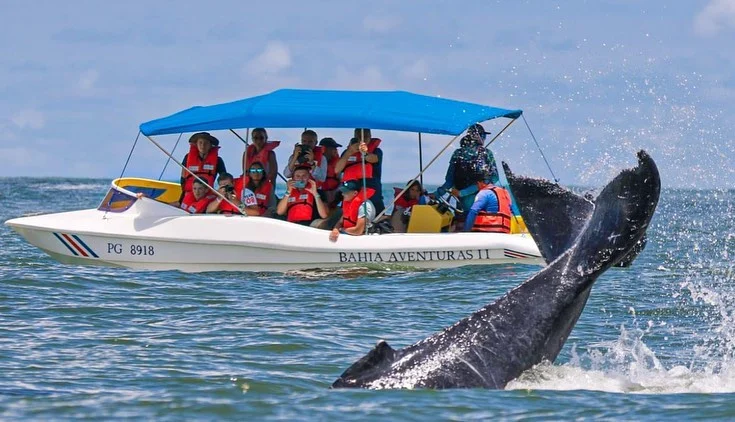
Most boat tours last about three hours, with morning and early afternoon departures built around calmer water and better light. We’d suggest the tour in the morning departure if you can, when the bay tends to be at its calmest and there’s less of a chance of rain.
The tour departs from Punta Uvita Beach and typically follows the same stretch of coastline every trip: the Whale’s Tail sandbar, Isla Ballena, the Tres Hermanas islets, and the sea caves at Ventanas, sometimes signposted as Playa Ventanas.
Along the way, guides watch for humpback and pilot whales, plus spinner, bottlenose, and spotted dolphins, and some tours stop to snorkel the reefs around Isla Ballena where visibility allows, with equipment included for the entire tour.
A boat tour is the only reliable way out to the deeper water where the whales actually feed and breed, and the same trip often turns into a dolphin tour on days when pods are more active than the whales.
Uvita has a small, well organized cluster of tour operators, and the concierge desk at Oxygen works directly with the best of the best rather than leaving you to sort through options on the beach. Ask about adding a private whale tour to your itinerary if you’d rather not share the boat, or simply book a tour in Costa Rica that our expert concierge can help recommend.
For guests who want more time on the water, a snorkeling day trip to Caño Island is worth the extra hours. The boat ride out takes roughly ninety minutes each way, and Caño Island is widely considered one of the best places in the world for snorkeling in Costa Rica, with better visibility and more marine life than the reefs closer to shore.
For rainforest and wildlife rather than reef, Corcovado National Park is the other full-day option from Uvita. Marino Ballena is the national park to see for whales. Corcovado is worth a separate day if you have one, and both sit within easy reach of the Osa region. Corcovado Wilderness Lodge is the best place to stay.
Green Season Is the Best Time to Go Whale Watching in Costa Rica
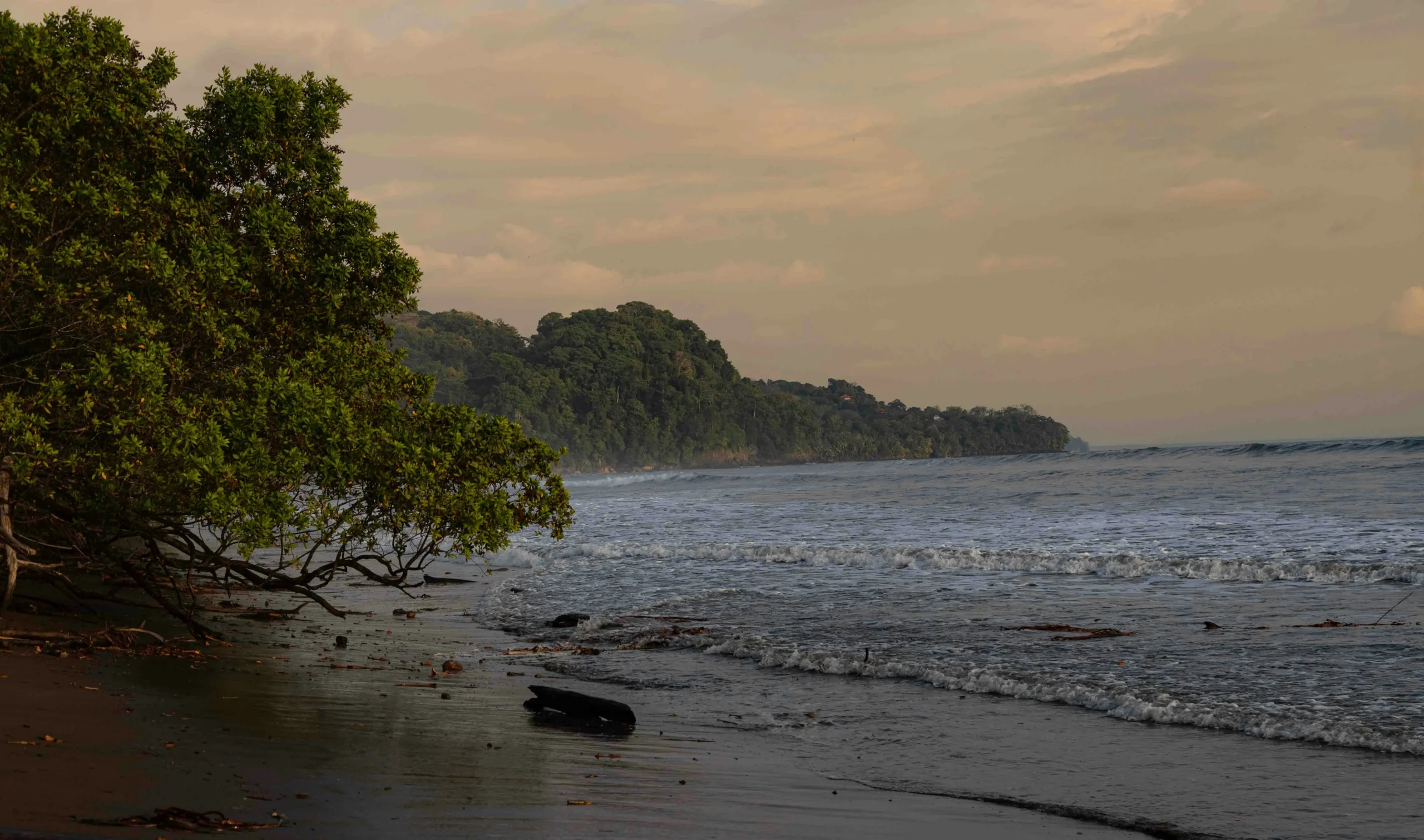
Here’s the part most Costa Rica travel planning gets backwards. The best time to spot whales without the crowds is exactly when most people assume the trip is riskier: green season, roughly May through November, when Costa Rica’s Pacific coast gets its afternoon rain.
Southern Hemisphere season, July through October, sits right in the middle of green season. That’s not a coincidence you have to work around. It’s the reason green season is worth booking on purpose rather than avoiding. Afternoon showers don’t reduce your chance of spotting whales, since tours run in the morning before the rain typically arrives, and a quick shower over the rainforest in the afternoon rarely reaches the boats at all.
What green season does change is everyone else’s plans. Fewer travelers means quieter beaches, a calmer property, and rates that run well below peak season. You’ll pay less than you would in peak season for the exact same whale encounter, and in some years a better one, since the southern migration brings more whales through the bay than the northern one does.
The reasons to come don’t disappear once the rain starts or the festival ends. The rainforest is greener, the waterfalls are fuller, the property is quieter, and the whales are still out there. It’s a small, specific way to feel the pura vida lifestyle Costa Rica is known for, not from a hammock, but from the deck of a boat with a whale surfacing beside you, one of the more unforgettable experiences the country has to offer, rain or shine.
For the rest of what’s around the park itself, from walking trails to sunset spots, see our full guide to Marino Ballena National Park.
How to Book Your Whale Watching Tour Through Oxygen
Ready to book your tour? Your concierge handles the whole thing, from picking the right departure to matching the price of any quote you’ve already found elsewhere.
- Talk to your concierge on arrival, or email ahead of your stay. Tours fill up fastest during the overlap windows and festival weekends, so earlier is better.
- Choose your departure. Morning tours tend to have calmer water, and early afternoon tours work well if you’d rather sleep in.
- Pack light for the water. Swimwear, a towel, reef-safe sunscreen, and a camera or binoculars cover most of it. Every reputable tour company in Uvita keeps a respectful distance from the whales, so binoculars help more than you’d think.
- Let your guide read the tide and the weather. Boat tours run through green season rain without trouble, but your captain will always make the final call on safety.
Ready to watch a whale surface a few feet from your boat? Ask your concierge to book the Whale & Dolphin Tour, then come home to an Oceanview Villa with the Whale’s Tail still in view.